





stealthmodels.

MODEL BENCHMARKS

Muse Spark Open

Meta's open-weight coding and agent model combines 816B total parameters, 42B active per token and native image, audio and video understanding.

BENCHMARK BY BENCHMARK

Muse Spark Open benchmark scores

StealthMark
43.5/100Overall rank 37/64
General Intelligence
42.4/100
Visual Intelligence
45.4/100

Muse Spark OpenOther modelsMedian

Reasoning efficiency

How many reasoning tokens a model needs for the quality it delivers.

Single-step reasoningHow much it reasons to understand a taskRank 46/62
Multi-step reasoningHow much it keeps reasoning as a task goes onRank 43/60

Cost efficiency

How much Performance you get for your money.

Rank 52/55

DATASHEET

Muse Spark Open specs and pricing

A good fit forCoding agents, repository analysis and multimodal workflows, with hosted APIs or Unsloth GGUFs for local deployment.

Muse Spark OpenOther modelsMedian

PriceInput / output per 1M tokens
$1.25 / $4.25Cheaper than 18 of 46 others
Context windowTokens in one request
1,048,576Joint largest with 21 others
Output speedTokens per second, our measurement
361 tokens/sFaster than 48 of 54 others
Developer
Meta
Released
15 Oct 2026
Family
Muse Spark
Open model
Yes
Local model
No
Origin
United States
Parameters
816B
Active parameters
42B
Max output
1,048,576 tokens
Input → output
Text, image, audio, video → text
Architecture
Sparse mixture-of-experts Transformer with perception encoders; 62 decoder layers, 256 experts with 8 selected per token, grouped-query attention and sliding-window/full-attention layers.

Self-host Muse Spark Open

Hardware
High-memory local or multi-GPU server
Download size
176 GB (UD-IQ1_S) to 506 GB (UD-Q4_K_XL)

Unsloth GGUF downloads

All prices and providers2

Vercel AI Gateway / OpenRouter; input 1.25 USD/1M; cached read 0.15/1M; output 4.25/1M

  • Vercel AI GatewayObserved 2026-10-15
    Input $1.25Output $4.25Cached read $0.15

    per 1M tokens

    meta/muse-spark-open
  • OpenRouterObserved 2026-10-23
    Input $1.25Output $4.25Cached read $0.15

    per 1M tokens

    meta/muse-spark-open
Deployment details
  • UD-IQ1_M209 GB · UD-IQ1_M
  • UD-IQ1_S176 GB · UD-IQ1_S
  • UD-IQ2_S275 GB · UD-IQ2_S
  • UD-IQ2_XXS226 GB · UD-IQ2_XXS
  • UD-IQ3_XXS340 GB · UD-IQ3_XXS
  • UD-Q2_K_XL311 GB · UD-Q2_K_XL
  • UD-Q3_K_XL401 GB · UD-Q3_K_XL
  • UD-Q4_K_XL506 GB · UD-Q4_K_XL

High-memory local or multi-GPU server; Unsloth quantization and CPU/GPU offload supported

Measurements and sources13

Muse Spark family

  1. Muse Spark Open43.5This model
  2. Muse Spark 1.338.0Compare Muse Spark Open and Muse Spark 1.3

GAME BENCHMARKS

Watch Muse Spark Open play

Stitchlight

Long-term planning and adapting to surprises

No run
No run yetMuse Spark Open has no recorded Stitchlight run.

Explore a fogged world seen only as text. Keep health, hunger, thirst and mana up, and use items and spells to solve what blocks the way. One hand-made stage in one continuous conversation. The score counts what the model achieves and how well it plays: clever solutions earn points, repeated mistakes cost more each time.

Play Stitchlight yourself

Latch

Cooperative planning and learning from experience

75.7/100Rank 18/61
Cleared 5 of 5
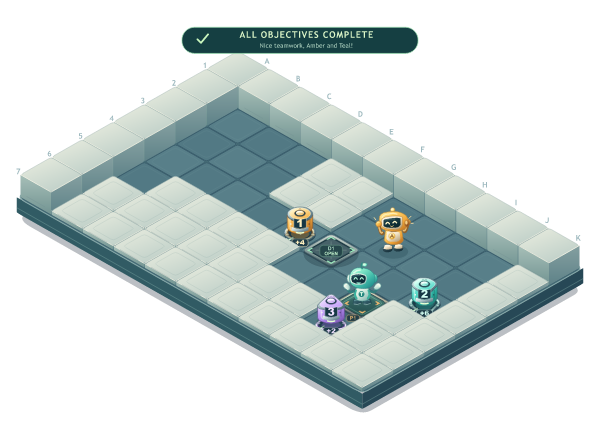
Latch: complete playing field
Level 519.6 ptsTurn 32 / 40

Points per level

  1. Level 1Hold the door5.2 ptsBest 5.2Cleared
  2. Level 2Crossfeed9.8 ptsBest 10.2Cleared
  3. Level 3Relay vault19.2 ptsBest 19.2Cleared
  4. Level 4Passing bay17.8 ptsBest 18.2ClearedFinished early · 1 beacon left
  5. Level 5Second thoughts19.6 ptsBest 20.8Cleared

Coordinate two robots to push numbered cores onto matching sockets. Pressure plates hold doors open; moving either robot uses one turn. 5 levels in sequence, up to 152 turns in total. Earlier moves and outcomes carry forward, testing learning across levels.

Foresight

Anticipating threats and planning ahead

29.4/100Rank 45/60
Survived 0 of 3
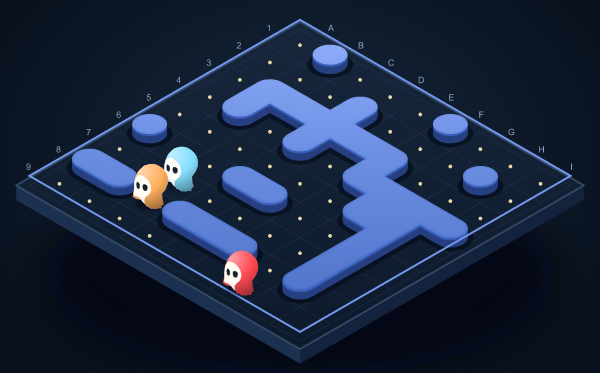
Foresight: complete playing field
Level 38 ptsTurn 15 / 20

Points per level

  1. Level 1Second Thoughts4 ptsBest 28Out of lives
  2. Level 2Pressure Pot9 ptsBest 15Out of lives
  3. Level 3Hide or Flight8 ptsBest 19Out of lives

Collect coins while avoiding ghosts. Ghosts move before the player each turn, and collisions cost a life. 3 levels in sequence, up to 66 turns in total. Earlier moves and outcomes carry forward, testing learning across levels.

Muse Spark Open benchmark results ↗

StealthMark score

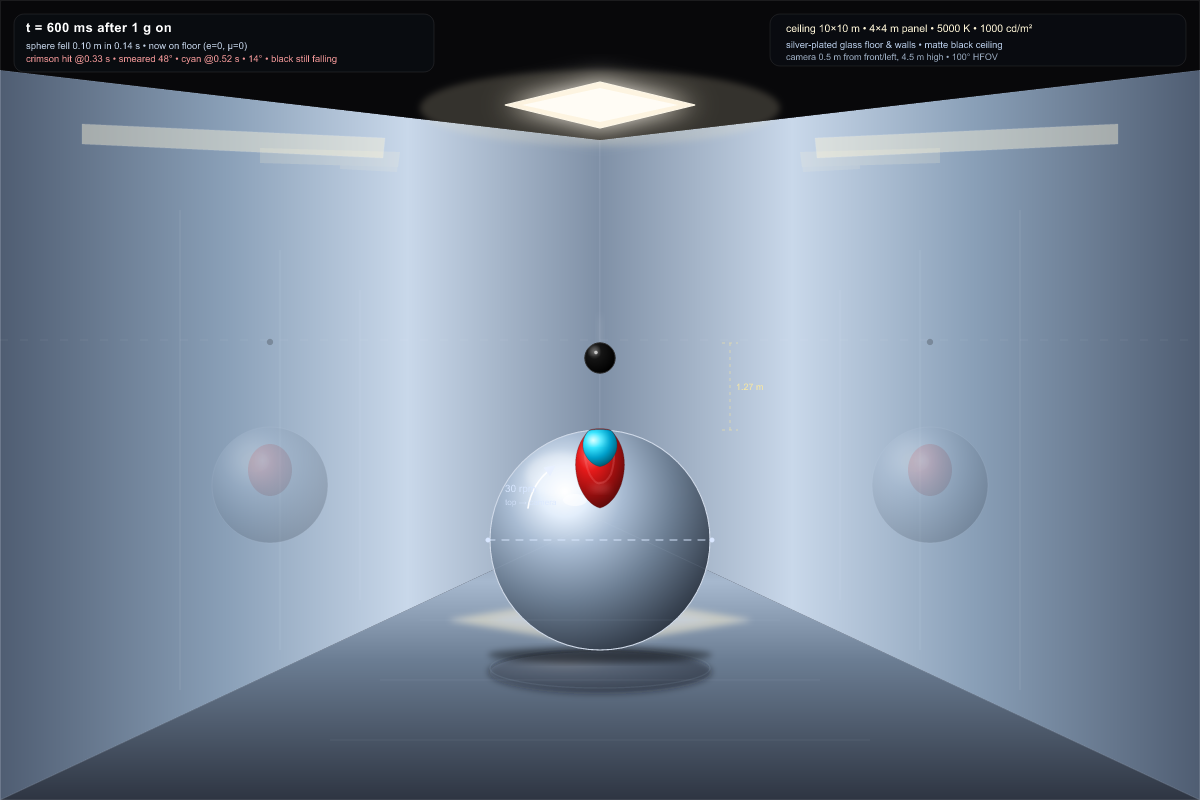
StealthMark measures how well a model’s abilities carry over to original, demanding tasks it could not have trained for: physical and spatial reasoning, planning across many steps, and precise visual work. How StealthMark works explains every benchmark, what it tests and why it is hard.

General Intelligence

The ability to reason, plan, solve problems and understand how things relate and behave. A high score means it thinks hard problems through, from careful analysis to plans that span many steps.

Visual Intelligence

The ability to understand visual intent and turn ideas, descriptions and plans into coherent, effective visuals. A high score means design ideas come out the way you meant them, in illustrations, icons, diagrams or interface visuals.

Overall score

Overall shows how well a model’s abilities carry over to original, demanding tasks, weighting every benchmark into one score. Estimated means the total includes an estimate for one missing scene.

Judging

Scores reflect how well each result meets the benchmark requirements. Game scores come from the recorded play: the points earned on each level and how each level ended. How StealthMark keeps scores honest.

Games

Each game is a sequence of levels, and earlier moves carry into later levels. A level that was not played is shown as not played and never counts as zero. Play every level of Latch or Foresight yourself to get a score calculated like the models’.

Reasoning efficiency

Good results with little thinking score high. On each task, a model’s result and reasoning tokens are compared with every other model and combined with the Balanced Integration Score (Liesefeld & Janczyk, 2019); 50 is average. Single step shows how much reasoning a model needs to understand and solve one problem, multi-step how efficiently it keeps working on a task by building on its earlier reasoning, as in agentic workflows. Not part of StealthMark.

Cost efficiency

How much StealthMark a model delivers for its money, in StealthMark points per dollar: its overall score divided by what one benchmark task costs it on average. The cost is what our runs were charged, or their tokens at the model’s list price; benchmarks a model has not run yet are estimated from its other costs. Like StealthMark, it is absolute and compares with no other model. Not part of StealthMark.

BENCHMARK RESULTS

Compare results

This link opens the same results in the same order.

StealthMark benchmark results

Reset benchmark preferences?

Return to the default view, clear comparison selections and restore the advertisement.