stealthmodels.

MODEL BENCHMARKS

Muse Ember (early version)

Frozen record of the stealth checkpoint Meta calls an early version of Muse Ember. It preserves Crouton Alpha’s original benchmark results and identity evidence. No gateway has served it since 9 November 2026, and no new runs are planned under this ID.

BENCHMARK BY BENCHMARK

Muse Ember (early version) benchmark scores

StealthMark
47.4/100Overall rank 28/64
General Intelligence
43.3/100
Visual Intelligence
54.9/100

Muse Ember (early version)Other modelsMedian

Reasoning efficiency

How many reasoning tokens a model needs for the quality it delivers.

Single-step reasoningHow much it reasons to understand a taskRank 39/62
Multi-step reasoningHow much it keeps reasoning as a task goes onRank 21/60

Cost efficiency

How much Performance you get for your money.

Rank 1/55

DATASHEET

Muse Ember (early version) specs

A good fit forReference only: original Crouton Alpha benchmark, SVG and identity evidence.

Muse Ember (early version)Other modelsMedian

Output speedTokens per second, our measurement
175 tokens/sFaster than 37 of 54 others
Developer
Meta
Family
Muse Ember
Open model
No
Local model
No
Origin
United States
Parameters
Not disclosed

Related models

  1. Muse Ember (early version)47.4This model
  2. Muse Ember

GAME BENCHMARKS

Watch Muse Ember (early version) play

Stitchlight

Long-term planning and adapting to surprises

No run
No run yetMuse Ember (early version) has no recorded Stitchlight run.

Explore a fogged world seen only as text. Keep health, hunger, thirst and mana up, and use items and spells to solve what blocks the way. One hand-made stage in one continuous conversation. The score counts what the model achieves and how well it plays: clever solutions earn points, repeated mistakes cost more each time.

Play Stitchlight yourself

Latch

Cooperative planning and learning from experience

59.5/100Rank 30/61
Cleared 4 of 5
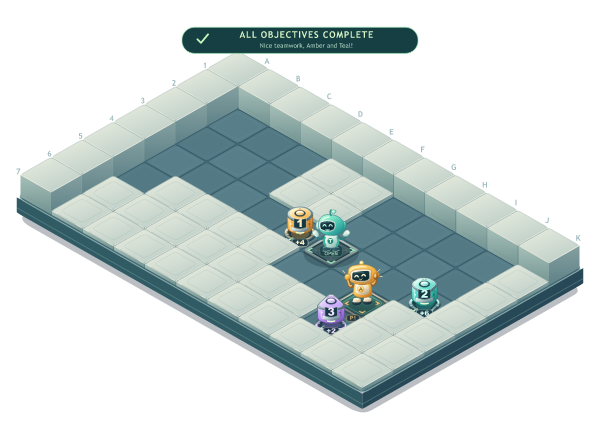
Latch: complete playing field
Level 520.2 ptsTurn 29 / 40

Points per level

  1. Level 1Hold the door5.2 ptsBest 5.2Cleared
  2. Level 2Crossfeed9.4 ptsBest 10.2Cleared
  3. Level 3Relay vault11.2 ptsBest 19.2Finished early
  4. Level 4Passing bay18.2 ptsBest 18.2ClearedFinished early · 3 beacons left
  5. Level 5Second thoughts20.2 ptsBest 20.8Cleared

Coordinate two robots to push numbered cores onto matching sockets. Pressure plates hold doors open; moving either robot uses one turn. 5 levels in sequence, up to 152 turns in total. Earlier moves and outcomes carry forward, testing learning across levels.

Foresight

Anticipating threats and planning ahead

32.3/100Rank 37/60
Survived 1 of 3
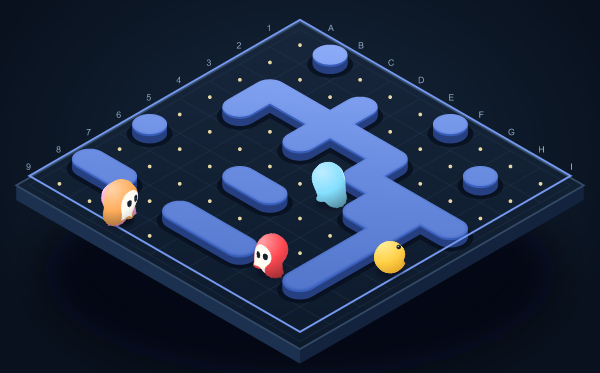
Foresight: complete playing field
Level 39 ptsTurn 20 / 20

Points per level

  1. Level 1Second Thoughts3 ptsBest 28Out of lives
  2. Level 2Pressure Pot7 ptsBest 15Out of lives
  3. Level 3Hide or Flight9 ptsBest 19Survived

Collect coins while avoiding ghosts. Ghosts move before the player each turn, and collisions cost a life. 3 levels in sequence, up to 66 turns in total. Earlier moves and outcomes carry forward, testing learning across levels.

Muse Ember (early version) benchmark results ↗

StealthMark score

StealthMark measures how well a model’s abilities carry over to original, demanding tasks it could not have trained for: physical and spatial reasoning, planning across many steps, and precise visual work. How StealthMark works explains every benchmark, what it tests and why it is hard.

General Intelligence

The ability to reason, plan, solve problems and understand how things relate and behave. A high score means it thinks hard problems through, from careful analysis to plans that span many steps.

Visual Intelligence

The ability to understand visual intent and turn ideas, descriptions and plans into coherent, effective visuals. A high score means design ideas come out the way you meant them, in illustrations, icons, diagrams or interface visuals.

Overall score

Overall shows how well a model’s abilities carry over to original, demanding tasks, weighting every benchmark into one score. Estimated means the total includes an estimate for one missing scene.

Judging

Scores reflect how well each result meets the benchmark requirements. Game scores come from the recorded play: the points earned on each level and how each level ended. How StealthMark keeps scores honest.

Games

Each game is a sequence of levels, and earlier moves carry into later levels. A level that was not played is shown as not played and never counts as zero. Play every level of Latch or Foresight yourself to get a score calculated like the models’.

Reasoning efficiency

Good results with little thinking score high. On each task, a model’s result and reasoning tokens are compared with every other model and combined with the Balanced Integration Score (Liesefeld & Janczyk, 2019); 50 is average. Single step shows how much reasoning a model needs to understand and solve one problem, multi-step how efficiently it keeps working on a task by building on its earlier reasoning, as in agentic workflows. Not part of StealthMark.

Cost efficiency

How much StealthMark a model delivers for its money, in StealthMark points per dollar: its overall score divided by what one benchmark task costs it on average. The cost is what our runs were charged, or their tokens at the model’s list price; benchmarks a model has not run yet are estimated from its other costs. Like StealthMark, it is absolute and compares with no other model. Not part of StealthMark.


BENCHMARK RESULTS

Compare results

This link opens the same results in the same order.

StealthMark benchmark results

Reset benchmark preferences?

Return to the default view, clear comparison selections and restore the advertisement.